
Auditory Processing Disorder Explained
Have you ever noticed a child who hears perfectly well but seems to struggle with understanding what’s being said? Or maybe you’ve found yourself asking people to repeat things, not because you didn’t hear them, but because you couldn’t quite make sense of the words. These could be signs of a condition calledauditory processing disorder, which is a set of hearing-related difficulties that affect how the brain processes sound.
At Hearing & Balance Specialists of Kansas City, we understand how confusing and frustrating this condition can be, especially for families with children who are struggling in school. Our team is dedicated to diagnosing and treating auditory processing disorder with compassion, experience, and proven techniques.
What Is Auditory Processing Disorder?
Auditory processing disorder, often shortened to APD, refers to a problem in the way the brain interprets sounds that are heard. The ears may work just fine, but the brain doesn’t make sense of the sound signals in the usual way. This can make it hard to follow directions, pick out important sounds in noisy places, or understand fast or complicated speech.
Children with auditory processing disorder might seem like they aren’t paying attention or might be labeled with attention issues. Adults may find it challenging to follow conversations or feel easily overwhelmed in loud environments.
At Hearing & Balance Specialists of Kansas City, we want you to know that this condition is very real and treatable. Our goal is to help each patient strengthen their listening and communication skills so they can succeed at school, work, and in daily life.
Signs and Symptoms of Auditory Processing Disorder
There are several signs that may indicate someone is dealing with auditory processing disorder. These include:
Frequently asking “what?” or “huh?”
Difficulty following spoken directions
Trouble understanding speech in noisy places
Problems distinguishing between similar sounds
Poor listening skills, especially in group settings
Difficulty with reading or spelling
These symptoms can often be mistaken for hearing loss or attention problems, but the root issue is actually how the brain is processing sound. That’s why getting a proper diagnosis is key.
Diagnosing Auditory Processing Disorder
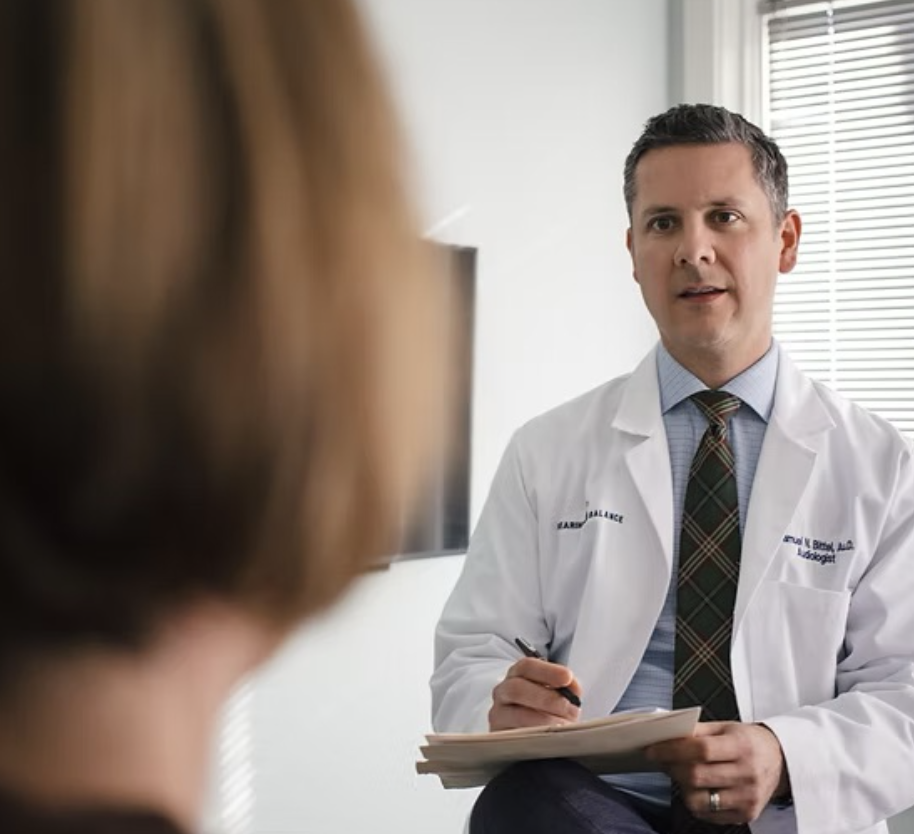
Diagnosing auditory processing disorder involves a detailed evaluation by our Doctors of Audiology. First, we’ll conduct a thorough hearing test to rule out hearing loss. If hearing is normal, we move on to specialized auditory processing tests that examine how the brain responds to different types of sounds, speech, and background noise.
These tests may include listening to sounds in both ears at once, identifying subtle differences in speech, and understanding speech in noisy environments. These activities help us learn which parts of the auditory system may need support or training.
Why Early Diagnosis Matters
The sooner auditory processing disorder is identified, the better the outcomes. In children, APD can affect how well they do in school, how they socialize, and how they develop reading and language skills. Early intervention can provide the tools and strategies needed for long-term success.
Adults with untreated APD may find themselves avoiding social situations or struggling at work. At Hearing & Balance Specialists of Kansas City, we believe no one should feel left out or left behind because of a condition that can be managed.
How We Treat Auditory Processing Disorder
Once we confirm a diagnosis of auditory processing disorder, we create a personalized treatment plan tailored to each patient’s needs. Treatment may include:
Auditory training exercises to improve listening skills
Use of assistive listening devices like FM systems
Communication strategies for families and teachers
Environmental modifications, such as reducing background noise
Collaboration with educators
Our approach is supportive, friendly, and designed to build confidence. We believe in working closely with families, schools, and care teams to create a well-rounded plan for success.
Helping Children with Auditory Processing Disorder Thrive
Children withauditory processing disorder are often bright, curious, and eager to learn, but their brains just need a bit of extra help processing sounds. With the right tools, these kids can flourish in school and in life.
We’ll teach families how to give directions more clearly, use visual aids, and build listening routines that strengthen processing skills. Our team is also happy to provide support to teachers and school staff so they can better understand how to help these students succeed.
Support for Adults with APD
Auditory processing disorder doesn’t only affect children. Adults may also struggle with interpreting speech, especially in noisy or fast-paced environments. This can impact job performance and relationships.
We offer supportive, judgment-free care for adults with APD, including listening training, communication techniques, and recommendations for hearing technology that can make conversations easier.
Why Choose Hearing & Balance Specialists of Kansas City?
Our experienced and highly trained audiologists are passionate about helping patients withauditory processing disorder improve their lives. We combine advanced diagnostic tools, customized treatment plans, and years of hands-on experience to make sure each person receives the care they deserve.
We know this journey can be challenging, but you don’t have to walk it alone. Whether you’re a parent seeking help for your child or an adult looking for answers, our team is here to guide you every step of the way.
Get Started with Our Team
If you or someone you love is struggling to make sense of sounds, don’t wait. Auditory processing disorder is manageable with the right support. Our team at Hearing & Balance Specialists of Kansas City is committed to helping patients strengthen their listening, boost their confidence, and enjoy clearer communication. Let us help you find the clarity you’ve been missing.
Contact Us Today
Are you ready to take the next step toward clearer communication? Our caring team is standing by and ready to help. Whether you live near Lee’s Summit, Missouri (call us at 816-507-8885), Overland Park, Kansas (reach us at 913-521-9090), or Kansas City, Missouri (call 816-800-8020), you’ll find experienced professionals nearby to support your journey. We take the time to truly listen and understand your concerns, so we can create a care plan that works for you. Your comfort, confidence, and success are always our top priorities. Please don’t wait. Schedule an appointment and take the first step toward better understanding and communication today.


Comments